Guest Post: Catherine Cavendish – Damned by the Ancients

With only a week until Halloween, what better way to unwind than with some poltergeist activity? It’s my pleasure to welcome guest author Catherine Cavendish back to the blog today, who has such a tale to tell. And this prolific author has a new book out – Damned by the Ancients. Over to you for another haunting blog post, Cat…

The Poltergeist of Penny Lane
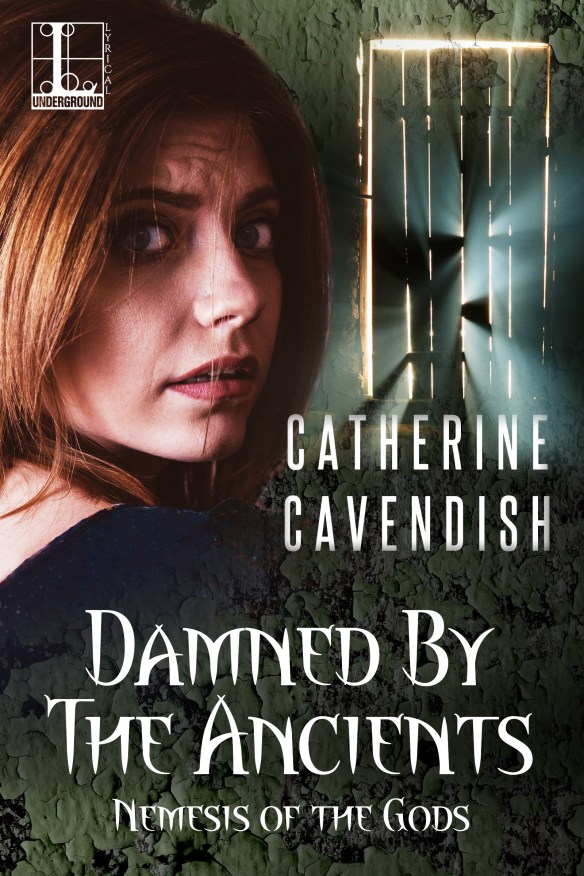
pic 1In my novel, Damned by the Ancients, the beautiful city of Vienna plays host to one of the deadliest of manifestations. Dr Emeryk Quintillus is pure evil personified, obsessed with his quest and prepared to go to any lengths to get what he wants. He haunts his former home, the Villa Dürnstein, and incites the anger of the ancient gods he has hitherto striven to cultivate.

In real life, any property – domesticate, commercial, rich or poor can become the target of manifestations; some evil, others mischievous.

And then there are the others. The ones that become active, wax and then wane.

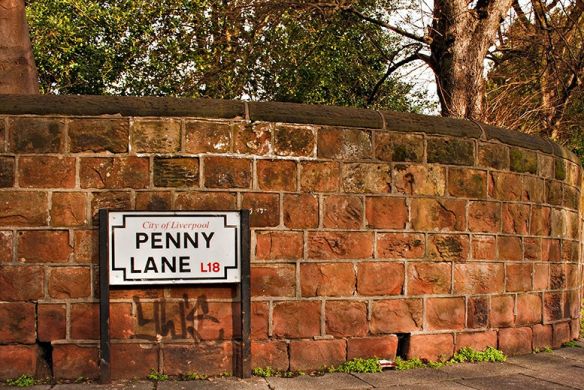
Such a phenomenon is reputed to be found at Number 44 Penny Lane, Liverpool. Before I go into detail, yes, this is thePenny Lane of Beatles fame. The lyrics mention a number of businesses that could be found there at the time but, perhaps understandably, did not mention the alleged goings on at number 44 which began to be witnessed during the First World War.
pic 2

But it may not have started there. During the 1890s, a number of witnesses reported seeing a white light surrounded by a blue aura, hovering over nearby Greenbank Road. This then moved to Penny Lane, glowing with an eerie luminescence. At the time, the vision was dismissed as a meteorological phenomenon. Yet, later that week horses, pulling an open landau, could not drag it up Penny Lane for a full half hour. Its wheels seemed to lock until suddenly they were released. Legends began to be created. Everything, it seemed, that went wrong locally could be blamed on The Witch of Penny Lane – even when the beer turned sour (in summer, with no refrigeration).

Fast forward then to the First World War and paranormal activity seems to have centred on Number 44. At this time, the building was a residential house but was unoccupied. Even so, a number of people reported hearing strange, loud noises, unexplained heavy footsteps and an unexplained voice all coming from the house. By 1930, the neighbours had to move out as the noises distressed them so much.
pic 3

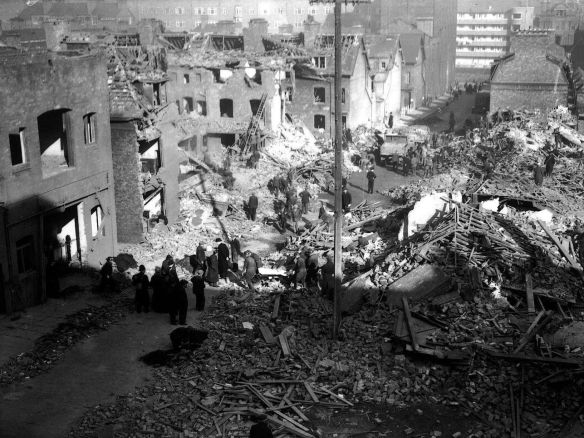
Like so much of the city of Liverpool, Penny Lane suffered a heavy toll of bombing during World War Two. By 1945, the house had been converted into a shop, was damaged severely and did not reopen. But yet again, neighbours were complaining of the terrible, unearthly noises issuing forth from it.

1971 saw the shop renovated and reopened as a print shop – Xerolith. But the owners received complaint after complaint that their premises, quiet and perfectly normal by day, became a very different place at night. Police were summoned on a number of occasions but could find no cause for the disruption.

The owners, Ken Shackman and John Hampton, mounted their own investigation and discovered a long history of hauntings, including a reported sighting by a neighbour who remembered when, as a child, she had seen a young woman with blonde hair suddenly materialise in front of her. The apparition then proceeded to comb her hair before disappearing. This was not, apparently, the only time this young woman was seen. Her appearance, combing her hair at a window in Number 44, had previously been reported by a Mrs Hales in 1955. At the time, there was no such person living above the shop. Other local shoppers at around that time had reported seeing a similar figure, who vanished before their eyes.

pic 4

Shackman and Hampton were determined to solve the riddle of their haunted shop and, equipped with a tape recorder, mounted an all-night vigil. Things started off quietly enough until suddenly banging and shuffling started up and the walls shook. All of these sounds were recorded on tape.

The ghosts have grown quiet over recent years and the shop is now a Lettings Agency. But, as history tells us, simply because they are slumbering now doesn’t mean they won’t reawaken…
pic 5

Unfortunately for the Mortimer family, that is exactly what is about to happen. Here’s what to expect from Damned by the Ancients:

INFINITY IN DEATH

Vienna, 1908

Gabriele Ziegler is a young art student who becomes infatuated with charismatic archaeologist Dr. Emeryk Quintillus. Only too late does she realize his true designs on her. He is obsessed with resurrecting Cleopatra and has retained the famed artist Gustav Klimt to render Gabriele as the Queen of the Nile, using ashes from Cleopatra’s mummy mixed with the paint. The result is a lifelike portrait emitting an aura of unholy evil . . .

Vienna, 2018

The Mortimer family has moved into Quintillus’s former home, Villa Dürnstein. In its basement they find an original Klimt masterpiece—a portrait of Cleopatra art scholars never knew existed. But that’s not all that resides within the villa’s vault. Nine-year-old Heidi Mortimer tells her parents that a strange man lives there.

Quintillus’s desire to be with Cleopatra transcends death. His spirit will not rest until he has brought her back from the netherworld. Even if he has to sacrifice the soul of a child
. . .

Damned by the Ancients is available from:

Amazon

Barnes and Noble

Apple

Google

Kobo

Kensington Publishing

About the author:

pic 6

Following a varied career in sales, advertising and career guidance, Catherine Cavendish is now the full-time author of a number of paranormal, ghostly and Gothic horror novels, novellas and short stories. Cat’s novels include the Nemesis of the Gods trilogy– Wrath of the Ancients, Waking the Ancients and Damned by the Ancients, plusThe Devil’s Serenade,The Pendle Curseand Saving Grace Devine.

Her novellas include Linden Manor, Cold Revenge, Miss Abigail’s Room, The Demons of Cambian Street, Dark Avenging Angel, The Devil Inside Her, andThe Second Wife

She lives with her long-suffering husband, and a black cat who has never forgotten that her species used to be worshipped in ancient Egypt. She sees no reason why that practice should not continue. Cat and her family divide their time between Liverpool and a 260-year-old haunted apartment in North Wales.

You can connect with Cat here:
 Catherine Cavendish

Facebook

Twitter

Goodreads


On setting in horror fiction – Halloween Haunts 2018

HH2018-banner2

Check out my guest blog over at Halloween Haunts 2018, the Horror Writers Association‘s daily dose of tricks and treats.

Yes, every day features a special giveaway and today’s is for a chance to grab a cool and coveted Final Frame Horror Film Contest t-shirt. Read on below the blog post for details.

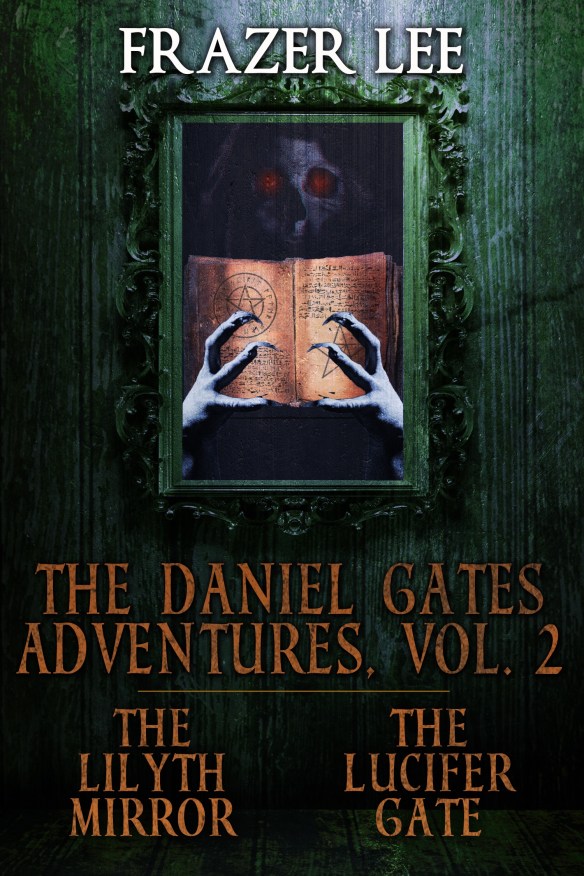
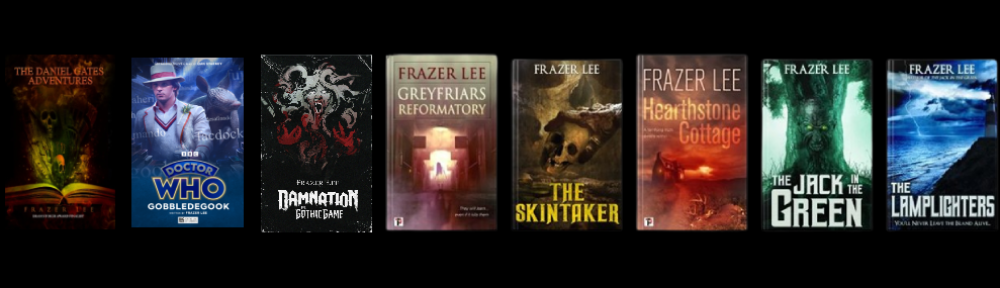
My blog post is about the importance of setting in my new horror novellas The Lilyth Mirror and The Lucifer Gate, both available now in The Daniel Gates Adventures Vol. 2 from Crossroad Press.

And when you’re done reading, be sure to peruse the other Halloween Haunts blog posts, which offer everything from author interviews and excerpts of new books, to writing advice and horror history – along with more great giveaways each day.

My thanks to the HWA (of which i am proud to be an Active Member) and Halloween Haunts editor Michele Brittany.

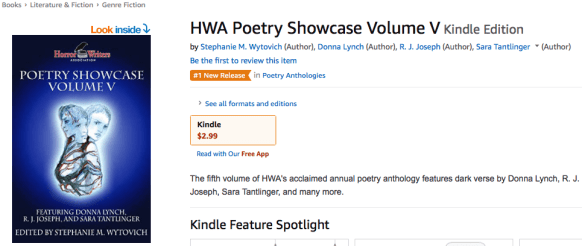
Out now: Horror Writers Association Poetry Showcase Volume V – the #1 Hot New Release on Amazon!

1632273858

Excited to see the release of the Horror Writers Association Poetry Showcase on Kindle.

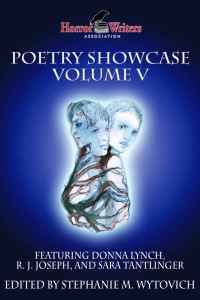
HWA Poetry Showcase Volume Five is edited by Stephanie M. Wytovich and co-curated by Jurors Mercedes M. Yardley and Michael Arnzen. It contains provocative and groundbreaking horror poets Donna Lynch, R.D. Lynch, Sara Tantlinger, and many more.

I’m honoured to have my first ever published poem Some Velvet Mourning included in this volume.

I can’t wait to read all the others! And I’m sure you can’t wait, either.

Download a copy here.

Number 1 hot new release on amazon

HWA Poetry Showcase Volume V – the #1 Hot New Release on Amazon!

HWA Poetry Showcase Volume V: Table of Contents

  1. Mother of Monsters by Trisha J. Wooldridge
  2. Attack of the Panic by Timothy P Flynn
  3. A Log Book Discovered on an Alien World by Terrie Leigh Relf
  4. Her Name by Susan Snyder
  5. Creature, Monster by Steve Dillon
  6. My Death by Simone Volponi
  7. Amalgamation by Sara Tantlinger
  8. Alice Escapes the Machinery of the Cosmos By Swallowing the Tongue of Her Unspoken Dream by Saba Syed Razvi
  9. Still Life by Robert Perez
  10. It’s Coming by Rob E. Boley
  11. These Dreams by Randy D. Rubin
  12. So She Burns It All Down by R. J. Joseph
  13. Beginding by Querus Abuttu (Dr. Q)
  14. Psalm by Peter Adam Salomon
  15. Call Me Mary by Naching T. Kassa
  16. Screaming Skulls by Michael H. Hanson
  17. The Ghost of Whitechapel by Marge Simon
  18. Angels of Death by Lori R. Lopez
  19. If I Only by Lisa Lepovetsky
  20. Revenants of the Antipodes by Kyla Lee Ward
  21. He Said by Kerri-Leigh Grady
  22. The Tired Old Life by Kenneth W. Cain
  23. My Garden by Kathryn Ptacek
  24. A Face in the Rain by John Palisano
  25. Safety Labels on Hospice Beds by Joanna Nelius
  26. Saint Mark’s Eve by Janice Leach
  27. Mulch by James Frederick Leach
  28. On the Verge of Sleep, At the Edge of a Shadow by James Ebersole
  29. The Witch Hunt by Jacopo Della Quercia
  30. The Demon at the Foot of Her Bed by G.O. Clark
  31. Some Velvet Mourning by Frazer Lee
  32. Twenty Hours by Elizabeth Massie
  33. The Church Service by Edward Ahern
  34. Charmed by E. F. Schraeder
  35. Dolls by Donna Lynch
  36. Broad Daylight by Denise Dumars
  37. Sins of the Father by David E. Cowen
  38. I Am by Cynthia Pelayo
  39. Savor by Colleen Anderson
  40. Gathered Words by Cindy O’Quinn
  41. The Joy of Sewing by Christina Sng
  42. We Built This City (on Tired Bones) by Chad Stroup
  43. Return to the Prehistoric Garden by Chad Hensley
  44. Blood Work by Carina Bissett
  45. The Temptation of the Moon to Shadow by C.R. Langille
  46. Thirst by Annie Neugebauer
  47. The Dead in Spring By Ann K. Schwader
  48. Moloch Dreams by Angela Yuriko Smith
  49. Libri Haruspicy by Amanda Hard
  50. In This House by Allan Rozinski

Read ‘The Daniel Gates Adventures, Vol. 1’ at the special offer price of $1.29 / £0.99 — offer ends soon! #occulthorror #kindle #nook #ebook

DGvol1offer

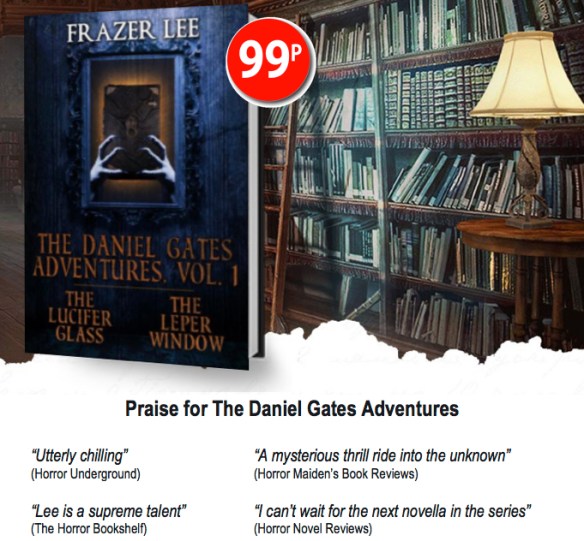
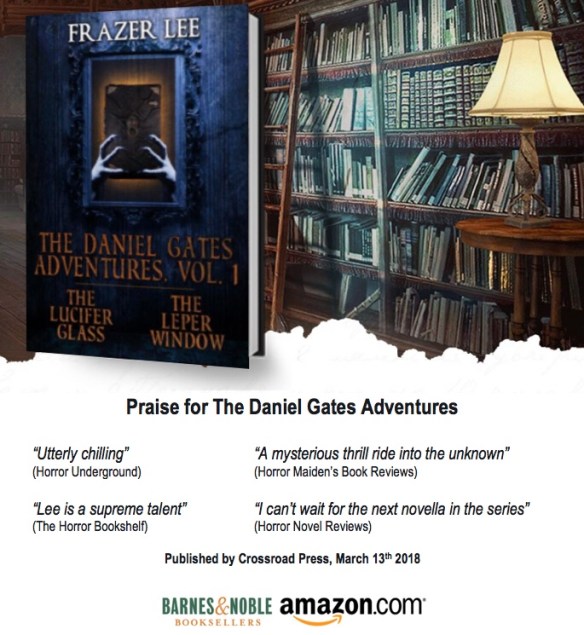
To celebrate the release of The Daniel Gates Adventures, Vol. 2: The Lilyth Mirror and The Lucifer Gate, publisher Crossroad Press has reduced the price of The Daniel Gates Adventures, Vol. 1: The Lucifer Glass and The Leper Window for a limited time.

The first volume contains the occult horror novellas The Lucifer Glass and The Leper Window, which introduce the character of Daniel Gates and are described as “utterly chilling” by Horror Underground, and “a page turner” by Brutal As Hell.

Grab a copy now from:

Amazon.com

Amazon.co.uk

Apple iBooks

Barnes & Noble

Crossroad Press

Smashwords

— be quick, the offer ends soon!

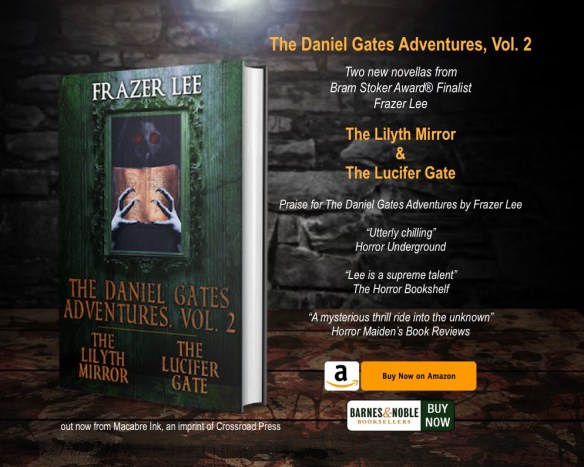
Book release day! The Daniel Gates Adventures, Vol. 2 is out now

DG_vol2_quotes

I always get a bit of a George McFly thrill when I have a new book published.

Today is one of those days.

The Daniel Gates Adventures, Vol. 2 contains two brand new novellas,
The Lilyth Mirror and The Lucifer Gate (books 3 and 4 in my occult horror series)

img_8646-2
You can buy the The Daniel Gates Adventures, Vol. 2 right now from:

Amazon.com

Amazon.co.uk

(and an Amazon near you!)

Barnes & Noble (Nook book)


I hope you enjoy it. 

And if you do please leave a review on Goodreads
& please share with your horror reading friends!
Reviews, ratings & shares really do make a difference.
Thank you.

Beast witches,
Frazer

img_8651

Also available – The Daniel Gates Adventures, Vol. 1: The Lucifer Glass & The Leper Window

The Daniel Gates Adventures, Vol. 2 – cover reveal

This week sees the publication of The Daniel Gates Adventures, Volume 2; containing the brand new, never before published occult horror novellas The Lilyth Mirror and The Lucifer Gate.

Feast your eyes on the full cover reveal:

(Hope it gives you pleasant nightmares)

More details about the book very soon!

And if you want to catch up on Daniel Gates’ adventures so far, you can find his first two escapades The Lucifer Glass and The Leper Window here.

Volumes 1 & 2 of the Daniel Gates Adventures are published by Macabre Ink, an imprint of Crossroad Press.

Translation rights are repped by literary agent Betty Anne Crawford of Books Crossing Borders, NY.

Interview at The Witch Haunt

fff488_84064f191ad2454388c70353e13f5da3mv2

In case you missed it, I was interviewed by the wonderfully witchy Gaby Triana over at her magickal blog The Witch Haunt.

It’s a five minute read (perfect for when you’re taking a well earned break from casting hexes, or gathering the ingredients for a flying potion) and you can check it out here.

When you’re done, be sure to peruse the full selection of Horror-themed interviews, which include Ramsey Campbell, Lisa Morton, and Jonathan Maberry.

My thanks to Gaby Triana at The Witch Haunt.

That’s a wrap! #OnEdge20

OnEdge20

#OnEdge20 is a series of posts commemorating 20 years since I rolled cameras on my first short film.

There’s an old filmmaking saying, which goes, “You make three movies.”

It’s very true. The movie you write is the first, and even that is subject to rewrites and last minute revisions (yesterday’s blog entry showed how the opening sequence of On Edge was modified to allow for the film’s completion when we were up against time constraints).

Secondly, there’s the movie you shoot. And this can seem quite alien to you as you look at it on the little monitor screen of the video-assist, or from beside the camera as you direct Charley Boorman to “Gurgle a bit more, make it sound like you’re really choking on the blood.”

NB: He really was choking on the blood.

Then there’s Doug Bradley, sneaking up behind you to whisper, “Tick… tock… tick… tock,” into your ear as a constant reminder that time (and your sanity) is escaping you. Ahh, such sweet suffering memories.

IMG_8018

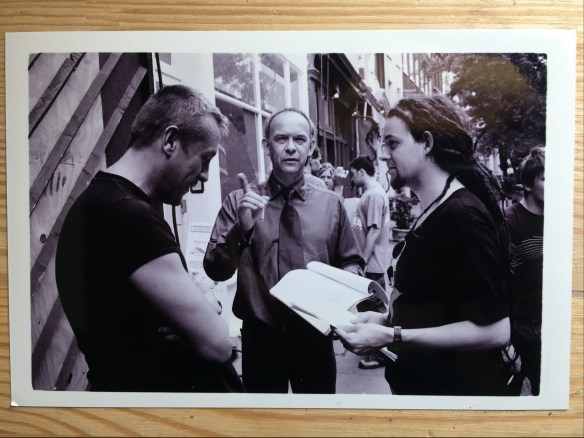
On Edge in Covent Garden, July 1998: Christopher Fowler, Doug Bradley — and some long-haired young idiot — discuss dental hygiene.

And finally, there’s the movie you edit. Looking through the archives for this series of blog posts, I was reminded how things have changed in movie production — and how little they have really changed. The technology is different, but the creative process from script to screen remains the same.

Here are some pictures that show (don’t tell)…

IMG_8011

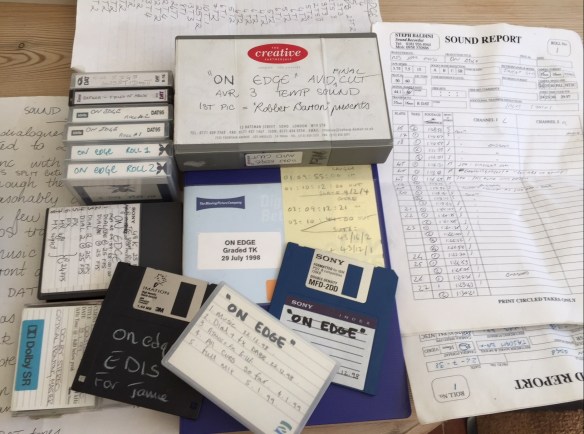
Yes, those really are floppy discs.

I mean, look above at how many DAT (digital audio tapes) were required to create the sound for the film. The impact of a short horror film like On Edge relies very much on its sound. Because I couldn’t do the ‘big reveal’ until the last available moment, the whirring of drills and the snagging of flesh was super important in creating a sense of unease in the viewer about what was happening to poor Peter Thurlow’s gob. You might be able to spy the soundtrack masters in there too. ‘Cycles of Abuse’ was a song by my metal band Self Destructive Nature, co-written with guitar legend Paulo Turin (Gangland, Paul DiAnno’s Battlezone) which rocks out over the opening/closing fetish club framing device. ’Sweets From On Edge’ was incidental music composed by Dooj (The Jazz Butcher), and I have such happy memories of working with him on that in his flat, and referencing the scores to several John Carpenter films and Don Coscarelli’s Phantasm, all of which became strong influences on the finished score. Sadly, Dooj passed away recently. He was a brilliantly inventive musician with a lovely, energetic personality to match his vivid pink hair.

These pictures also illustrate the different formats used, from the raw 35mm film footage (the rushes, or dailies) to the TK Master (a telecine’d digi-beta tape copy of all the film footage, used in editing, which was prepared at The Moving Picture Company), to the locked edit (again on digi tape) then the assembled 35mm with its associated sound mix. The optical effects (the vision blurs, whiteouts and dissolves, titles etc.) were created at Capital FX, and these were incorporated into the film edit by Vaughn Mullady at Tru Cuts.

The film we ended up with was a glorious 35mm cinemascope film print, with the sound running alongside it on an audio track. When the film was picked up by Columbia TriStar to screen in London cinemas with the feature film ‘I Still Know What You Did Last Summer’; there was a slight catch. We could screen at as many cinemas screens as we liked — but we had to pay for the prints. The prints were around £750 each, so we could afford a grand total of… two. With the master print out on tour at film festivals, our 2 new prints were screened at Odeon Leicester Square and The Warner Bros. West End (now the Vue). 8,000 paying cinemagoers saw our film, which also played a ton of festivals and bagged some prestigious awards.

Youtube was just about to take off (!), but in the early days, bandwidth restrictions meant that a maximum of 10 minutes footage was upload able to Youtube. So the first online screenings of the film (something we take for granted now) saw the film split into 2 parts as it was 15mins long!

I lost count the number of VHS screening tapes we had copied, including costly NTSC versions for the USA and other territories where PAL was not standard. Nowadays, you can pop your film onto Vimeo and have it selected (or rejected) by film festivals without the need to send costly tapes (the weight of which made shipping expensive too). Which brings us, rather neatly, to the present.

Twenty years later.

Would I have done anything differently, knowing what I know now? Yes, lots. But that’s not the point, really. Making On Edge taught me so much, and I am forever grateful to everyone who worked on the film, and/or supported it in any way.

Maybe someday (with the time & funds necessary to do such a thing) there could be a 4K-ultra HD remaster of the film, created from all the original elements?

For now, I hope these blog posts have provided an insight into a creative journey that I embarked on twenty years ago, and one that I still cherish to this day.

Thanks for reading. And for watching.

Oh, and don’t forget to floss.

IMG_8019

Dr Matthews – what’s the worst that could happen?

Watch On Edge
on Amazon VOD
and DVD

Check out the On Edge
screening history & list of awards
here


Dear diary. #OnEdge20

OnEdge20

#OnEdge20 is a series of posts commemorating 20 years since I rolled cameras on my first short film.

DAY 3

Yesterday, we looked at the evolution of the screenplay for On Edge, arguably the most crucial part of any film production.

Today, we’ll look at another vital element you can’t do without. And what is that, I hear you ask?

Why, a Batman Forever diary & organiser of course!

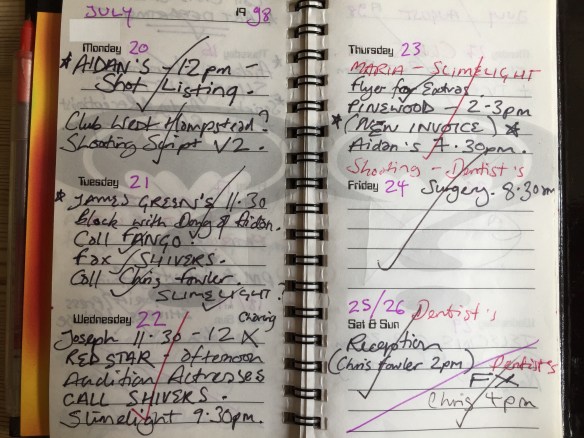
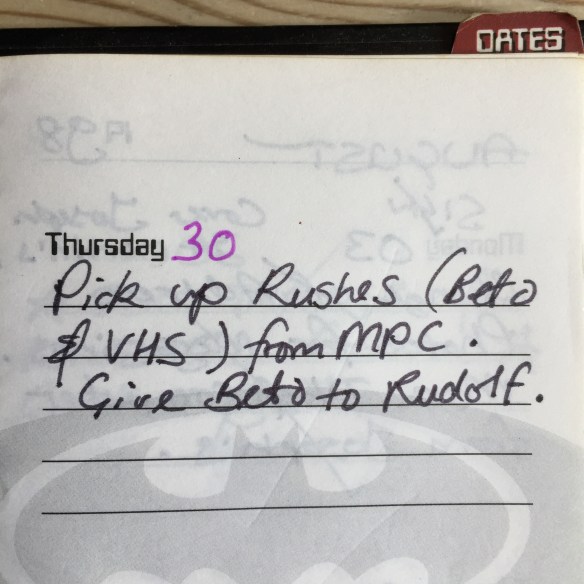
It doesn’t have to be a Batman branded one (although i can highly recommend it is, i mean, the one i used came with really cool stickers and everything) but I can’t underline enough the importance of having something portable that you can scribble in, with enough space for each day of the week to include the important milestones. This was 1998 of course, and we had computers back then but not smartphones. Imagine that. But even now, when I work on a project I use an honest-to-goodness paper diary to keep track of everything. It’s just simpler that way (for me anyway, your milage of course may vary).

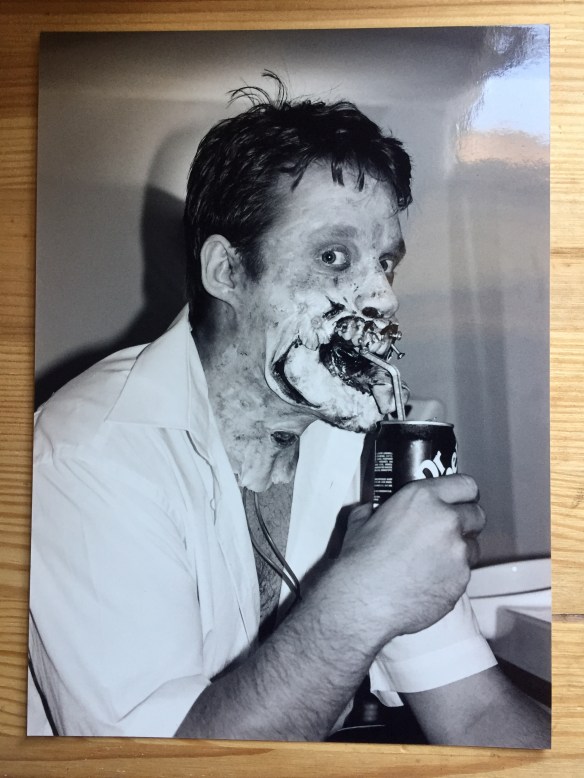
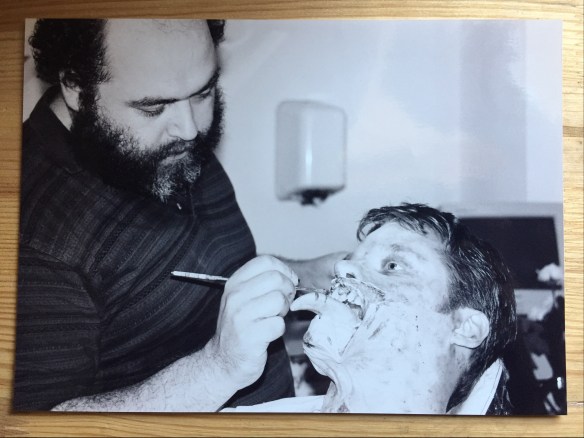
Pre-production means a LOT of meetings. For On Edge, there were meetings to be had with the Heads of Department (camera, sound, art, assistant director, special effects, and of course with the cast!). One of my fondest memories about making On Edge is taking the train and a bus to Pinewood Studios to meet with Bob Keen at his Image Animation workshop to discuss the design of Charley Boorman’s prosthetics, and the ‘uber drill’ used by Doctor Matthews to create his latest dental masterpiece. Bob’s workshop was an Aladdin’s cave filled with such treasures as original Cenobite models from Hellraiser and the xenomorph eggs from Aliens. We decided it would be fun to incorporate actual dental implements into the make-up and the drill, and Bob sourced a vintage portable dentistry kit from an antique’s dealer in order to achieve this. I was like the cat who go the cream during these meetings, let me tell you. And later, on set, I got to tick off a bucket list moment — shouting, “More blood please Bob!” before a take. Sigh — it’s the little things that make life so fulfilling.

IMG_8017

Bob Keen applies prosthetics to Charley Boorman

Going through the diary all these years later revealed what an intense period of activity it was, juggling a day job (at that time I ran a market stall in Camden, and another in Charing Cross to pay the bills and to get me through university) and the many decisions necessary to prep the film for production. Producer Joseph and co-producer Juliet made sure everything ran smoothly (and some of the crew said the catering was even better than on some feature films they’d worked on!) even when we were down to the wire casting the role of the receptionist. Beth Murray (I had seen her brilliant turn in the music promo for Placebo’s Pure Morning) bagged the part, and she was perfect. With Doug Bradley and Charley Boorman on board as dentist and patient, we were ready to go.

The shoot itself passed by in a bit of a blur. We shot for three days at a dental clinic in Covent Garden, and this is where an astonishing coincidence happened. It turned out that the location we had chosen for the shoot was Christopher Fowler’s dentist’s! There was some poetry to that — but all lyricism went out of the window with the actual shoot.

The dentist was away on vacation during the shoot (smart man) leaving his (heavily pregnant) head nurse in charge of the building. The nurse herself warned us that she was given to violent mood swings and tearful outbursts due to her impending due date! Unknown to the film crew, a decorating team had also been booked to spruce up the clinic during our film shoot. Many people still think a film shoot is two actors, a camera and three hangers-on, but we had a crew of over 40 people working on On Edge, two enormous equipment trucks, a massive generator and a metric tonne of equipment to hoist up and down the stairs — a stairwell which was bloody well being painted while we were supposed to be making a movie. The nurse decided that 6pm was our absolute cut-off time for filming each day. When we factored in all the delays, due to being extra careful not to scuff the freshly painted walls and so on, we needed a later finish that that by day 3. And on that day, I ashamedly admit i began to lose my fragile grip on my sanity, rocking back and forth in my director’s chair and gurgling like a madman about ‘the coming apocalypse’. 

But it was all right. With the support of my amazing cast and crew, we simplified the opening sequence, so we could achieve it in the time remaining to us. I believe that a cash bribe.. um, I mean ‘bonus’… was made to the nurse-in-charge, and we even invited her to look down the camera lens at what we were doing, all to buy ourselves some more time.

Time is the fire in which we burn.

So if you’re making a movie, get yourself a good diary.

IMG_8001

Eagle-eyed readers will see that author Christopher Fowler was invited on set (time constraints changed his call time from 2pm to 4pm) and yes, he makes a cameo appearance in the film!

IMG_8002

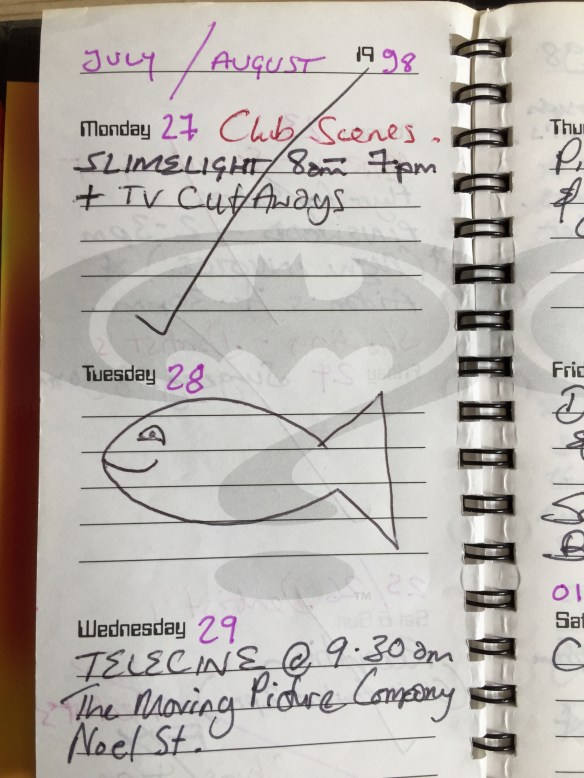
The fish symbolises a visit to the London Aquarium. Always book a day off the day after you wrap. Thank me later.

IMG_8003

The shoot ends and the edit officially begins!


Tune into the blog tomorrow for more #OnEdge20

Watch On Edge
on Amazon VOD
and DVD

Check out the On Edge
screening history & list of awards
here

Screenwriting on the edge. #OnEdge20

OnEdge20

#OnEdge20 is a series of posts commemorating 20 years since I rolled cameras on my first short film.

DAY 2

The most important element in filmmaking is a screenplay.

Okay, so there are exceptions to this rule. Some film and TV productions are improvised, though these often use a rough story outline and rehearsals to find the beats and dialogue. Even though there may be no formal script, the template is there. Camera rehearsals help to refine and block the action before a take. It’s the same process as writing and rewriting a script before it arrives on set for interpretation by the actors and crew. Even those productions that have pre-vis animatics, or simply storyboards in place of scripted words on a page are using a script of arts — the screenplay is visual storytelling, so it’s all the same thing.

In yesterday’s blog post, I recounted how I came to adapt Christopher Fowler’s story into a short film in the first place. I alluded to flashback scenes that were scripted, but not included in the final film. The reasons for this change were twofold:

1. The flashbacks weren’t at all vital in revealing the story of Thurlow’s encounter with Matthews. A general rule of thumb is that if the scene plays, it stays. Another way to express that is — if you read through the script with those scenes omitted, and the story still works (or works even better) without them, then they can go.

2. By cutting them, we would save thousands of pounds that we would otherwise have needed to spend on casting a ‘young Doctor Matthews’, a host of schoolchildren, a teacher, and an exam hall — and then lighting and filming in that location for at least pone shooting day, if not two.

So, cut them I did.

I had already decided to keep my deviation from the original short story, in the form of the fetish nightclub sequence that bookended the film, as I felt this would be the most cinematic way to open the film (rather like shouting, “Hey everyone! You’re watching an actual proper movie with real production values here!”). And it did work. I remember when On Edge was selected to screen with Columbia TriStar’s I Still Know What You Did Last Summer in London cinemas. We snuck in one evening with our guests — actor Charley Boorman and his lovely wife, as they shouldn’t attend the cast & crew screwing at the Prince Charles cinema as Charley was off riding motorbikes with his pal Ewan MacGregor — and to our delight a couple of patrons genuinely thought they had sat down in the wrong screening room. Testament to the fact that On Edge looked and sounded like a bona fide MOVIE-FILM, not the low-budget indie short that it actually was.

I recall being very delighted about that.

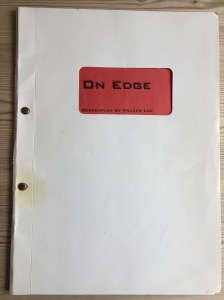
Anyway, back to the script! Trawling through the archives for #OnEdge20, i chanced upon an earlier draft of the script (the version I sent to Christopher Fowler on a wing and a prayer) that included some of the scenes which I later dropped. You can read a scan of that 4th draft version — for the first time in, well, the history of ever — below. I must have annotated the script after doing my first location recce at the dental studio we used for filming (more about that location in tomorrow’s blog post) — as you can see on the first page I have corrected ‘reception window’ to ‘reception desk’ in keeping with what was available at the actual showing location. The script is never finished, even if only little details, there are always many changes right up to and including when you are shooting the film.

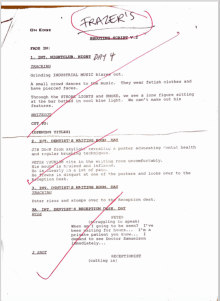
Talking of the shoot, I have also somehow managed (in the course of a gazillion house moves and life changing events) to have held onto the actual copy of the shooting script that I used on set during filming. You can see (in the scanned Shooting Script copy below) how each scene has been gleefully crossed out in lurid red pen. Each page we shot became a feather in my cap (as well as removing about a decade from my overall life expectancy in stress, worry and fingernail-down-to-the-quick tension — again, more about that in tomorrow’s blog post!). 

Be sure to check out the little diagram on page 5 of this shooting version of the script — this is basically Director of Photography Alan Stewart SAVING MY LIFE AND SAVING THE FILM. I have to post that ALL IN CAPS because it’s the TRUTH. Time is the enemy on a film shoot, and the universe always seem to conspire against you to ensure that you do not have enough of it. That little diagram shows how a brilliant DOP can simplify things for you, getting all the coverage (put simply – coverage is footage from angles that will cut together and give editing options later in the editing room so you don’t need to go back and reshoot costly pick-ups) so you can focus on directing and getting the performances you need. The doodles on that page show how the camera set-ups work for maximum coverage with minimum lighting moves — essential time-saving tactics that can mean the difference between getting everything in the can, or not. Alan is one of the best in the business, and it’s no surprise he has gone on to shoot big movies for the likes of Disney.

Also of note in the Shooting Draft are the scenes marked as ‘Deleted’. It’s pretty obvious to see which these are, and it is a revealing process to compare the Draft 4 script with the Shooting Script.

I hope this never-before-shared material is of some interest, and who knows, it might even be helpful / inspiring to anyone out there who is embarking on shooting their first short film.

IMG_7999

click to read On Edge draft 4


Screen Shot 2018-07-21 at 19.18.05

click to read the On Edge shooting script

Tune into the blog tomorrow for more #OnEdge20

Watch On Edge
on Amazon VOD
and DVD

Check out the On Edge
screening history & list of awards
here